

Renowned perfume publisher Federic Malle had this to say about luxury: “The word luxury has been used too often to define things that aren’t luxurious. Luxury is the work of a great mind. It is hard work. It is perfection”.
Federic is from a famous perfume family empire with links to works for Christian Dior and more. He was born into luxury. I agree with Federic’s assertion of luxury? Let me tell you a short story.
In my late teens, I wanted more than the pocket money my Mom and Dad gave me, so I figured I could make art and sell it, paintings to be precise. I started by painting sketches made by my Daddy, dating back to his days at the prestigious University of Science & Tech, Kumasi, Ghana. I was especially intrigued by his abstract sketches which were inspired by Ghanaian Adinkra symbolism.
In about 8 weeks, I had created 10 beautiful paintings with sizes ranging from 36cm to 42cm. Exposed to the art industry, I knew where to go to sell them. And using my pocket money for transportation I left home one day for Awolowo Road in Ikoyi.
Sparked up and in high spirits, I walked into each gallery in the area, hopeful of making a sale. But gallery after gallery, I was turned down. With nothing to lose, I would set out from home again, heading in another direction of highbrow Lagos, where I knew some established galleries were located. Again, I was turned down. However, something I hadn’t bargained for was already happening to me.
I saw things non of my contemporaries have ever seen. In these galleries, I was sucked into a hallucinatory realm of seeing the mind of the artists whose works were on display and it was nothing short of greatness. I saw the exquisiteness of art, the grandeur, the hard work, different styles, the perfection, and the value; from price to the calibre of people who patronised it.
When you see the Gucci, Fendi, Apple, HP, B&O, Land Rover, or Starbucks logo; do you see luxury? Could there be something that you do not know?
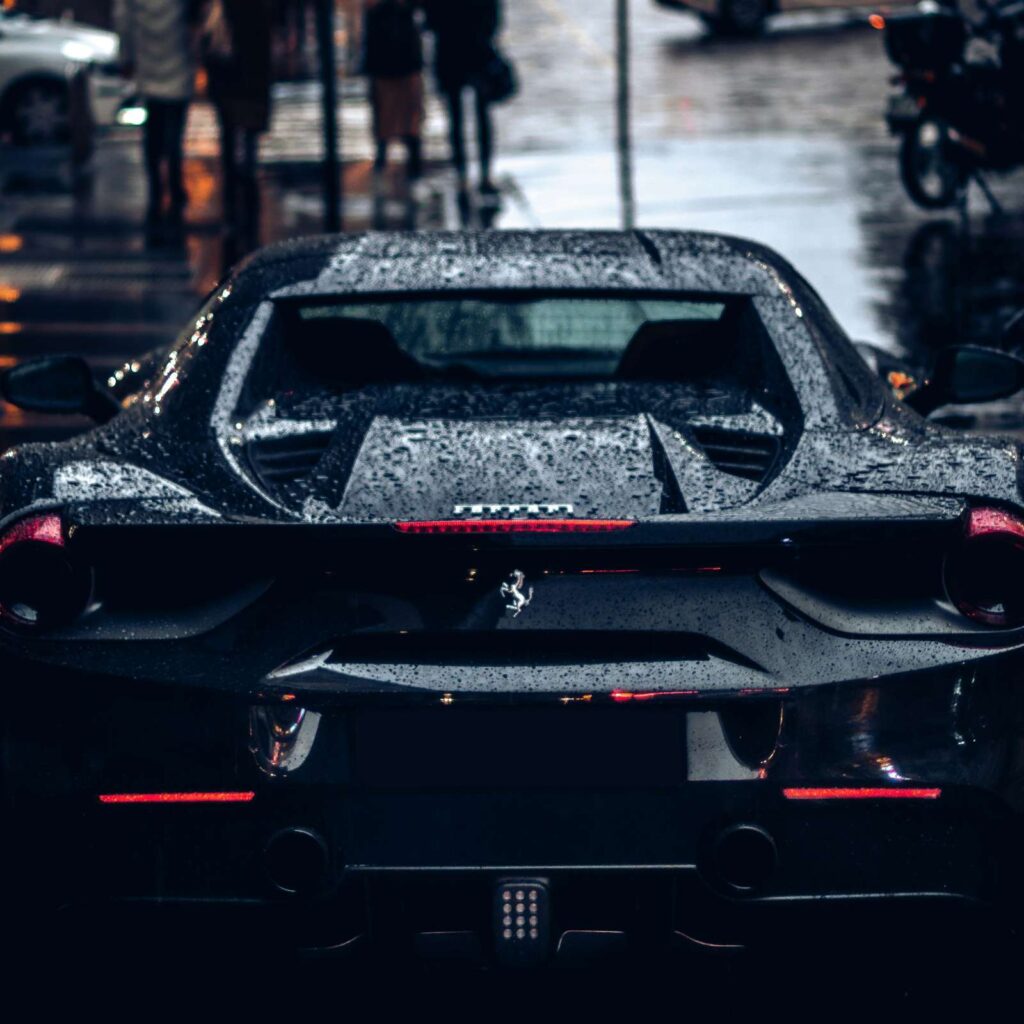
There is. A logo possesses all five attributes of the nature of luxury.
First, intelligence. A great logo is the product of intelligence. It is not merely drawn; it is conceived. It requires the combined application of thought, creativity, symbolism, aesthetics, strategy, and utility to create a visual idea capable of representing something far greater than itself.
Second, scarcity. A truly distinctive logo is created to be singular. It is not designed to look like everything else in the marketplace. Its value is partly derived from its distinction and exclusivity. The more unique and ownable the symbol, the more powerful its ability to represent the entity it belongs to.
Third, exceptional detail. A great logo carries finesse. Every proportion, line, curve, space, relationship, and visual decision matters. What may appear simple to the untrained eye can be the result of extraordinary precision and refinement. This is why some of the world’s most sophisticated logos appear deceptively simple.
Fourth, a particular user. A logo is not made for everyone. It is created for a particular entity, with a particular ambition, audience, position, and purpose in mind. Its ability to communicate effectively depends on the intelligence of those who understand what it represents and the value of what it signifies. If the entity it was created for did not exist, neither would the logo.
Fifth, High Value Quotient (HVQ). A logo is not merely something to possess; it is something to secure, maintain, and sustain as an asset of identity. When an organisation understands the value of its symbol, protects it, preserves its integrity, and carries it forward across generations, the logo transcends its immediate function. It becomes transferable as an asset of identity, capable of being inherited, preserved, and carried into legacy.
This is why I say a good logo is not a luxury service; it is a luxury product. It possesses the intelligence, scarcity, exceptional detail, exclusivity of purpose, and High Value Quotient that define the nature of luxury.