
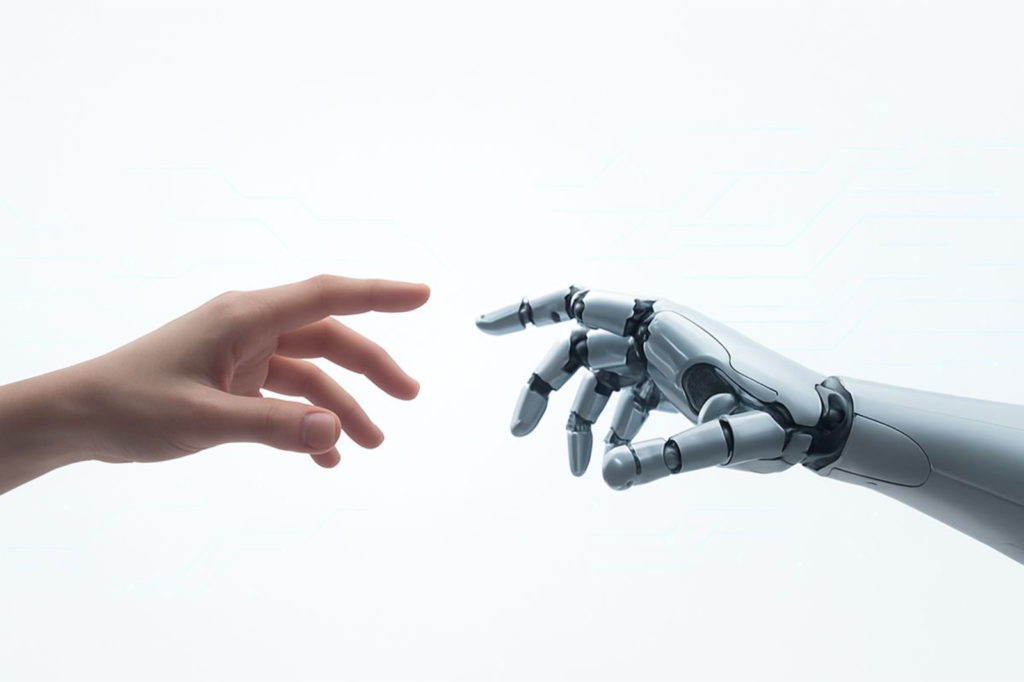
Artificial intelligence is changing the world of work, but the question future professionals should be asking is not simply, “Will AI take my job?” It is, “What can I become because AI exists?” AI is an enabler. It can augment human capability, accelerate learning, improve productivity, expand access to knowledge and create entirely new careers. The opportunity is therefore much larger than learning to use an AI tool. It is about understanding how technology intersects with human ability, knowledge and the problems society needs solved. The innovation economy will favour people who can recognise these intersections and continuously adapt to them.
The career pathways emerging around AI are already broad. At the technical core are Machine Learning Engineers, AI Research Scientists, Data Scientists and Applied Scientists, MLOps and AI Infrastructure Engineers, Prompt Engineers and AI Interaction Designers, Computer Vision Engineers, and NLP Engineers. Surrounding these are AI Ethics and Governance Specialists, AI Safety Researchers, AI Product Managers, AI Systems Auditors, Bias and Compliance Analysts, Data Engineers, and AI Trainers or Model Evaluators. In business and strategy, opportunities include AI Transformation Consultants, AI Business Analysts, Innovation and Digital Strategy Leads, AI focused Venture Capital or Startup Analysts, and emerging roles such as Chief AI Officer. Creative professionals can become AI Augmented Designers, Generative Content Creators, AI Art Directors, Creative Technologists, Synthetic Media Specialists, and Brand and Identity Strategists using AI driven insight tools. Legal and regulatory pathways include AI Policy Analysts, Technology and AI Law Specialists, Data Privacy Officers, and AI Standards and Compliance Consultants, including professionals working with frameworks such as the EU AI Act. Education is developing roles for AI Curriculum Designers, Corporate AI Trainers and Upskilling Facilitators, EdTech Product Specialists, and AI Literacy Coaches for SMEs and institutions. Healthcare and life sciences are opening pathways for Clinical AI Specialists, Bioinformatics and AI Drug Discovery Researchers, and Health AI Ethics Advisors. AI is also being integrated into finance through algorithmic trading, fraud detection and robo advisory; agriculture through precision farming and yield prediction; manufacturing through predictive maintenance and robotics; logistics and supply chains through demand forecasting and route optimisation; and the public sector through GovTech, smart cities and digital service delivery. Entrepreneurship creates further opportunities for AI Startup Founders, AI Tool and Plugin Developers serving niche markets, and AI powered SME Consultants helping smaller businesses adopt affordable AI solutions. And as AI advances, human centred roles become increasingly important, including AI Human Collaboration Designers, Trust and Safety Specialists, Community and Ecosystem Builders, and storytelling or sensemaking professionals who translate AI outputs into decisions.
This is why I encourage students to think less like job seekers and more like future leaders. A job seeker asks, “Where is there a vacancy for me?” A future leader asks, “What problem can I understand, what value can I create, and what opportunity can I build?” Leadership in the innovation economy will require technological fluency, but technology alone is insufficient. Leadership has character. It requires judgment, intellectual curiosity, responsibility, courage, collaboration and the willingness to make decisions when the answer is not obvious. The foundation for preparing for this future can therefore be expressed simply: Ideas. Technology. Knowledge. Continuous Adaptation. Have ideas worth pursuing. Understand the technology capable of advancing them. Build the knowledge and domain expertise to know what matters. Then continuously adapt as technology, industries and opportunities evolve. AI can generate possibilities and accelerate execution, but it does not remove the responsibility to think, judge and lead.
AI is already significant in our own work at Dayo Abiola Consulting, where we operate as specialist logo design and corporate identity consultants. We use AI as an enabler of expertise, not a replacement for it. It helps us and our team stay current with industry data, emerging design nuances, developments in our field, research, design approaches and best practices. It gives us another means of interrogating our thinking before decisions are made. There is also a practical example from my role as Creative Director. When someone asks me, “What do you think of our logo?”, I already know how to evaluate a logo professionally: its construction, distinctiveness, legibility, relevance, scalability, memorability, symbolism and effectiveness within a corporate identity system. But expertise does not make me immune to personal preference or emotional response. Where appropriate, I therefore subject the logo to AI powered scrutiny against the same principles and best practices with which I am familiar. It gives me another perspective and helps remove me, as much as possible, from the bias that can accompany personal judgment. I remain the expert responsible for the decision; AI provides another analytical position to interrogate it. That is the larger lesson for future leaders: AI becomes most valuable when human expertise knows how to direct it, question it, challenge its output and apply it with judgment.